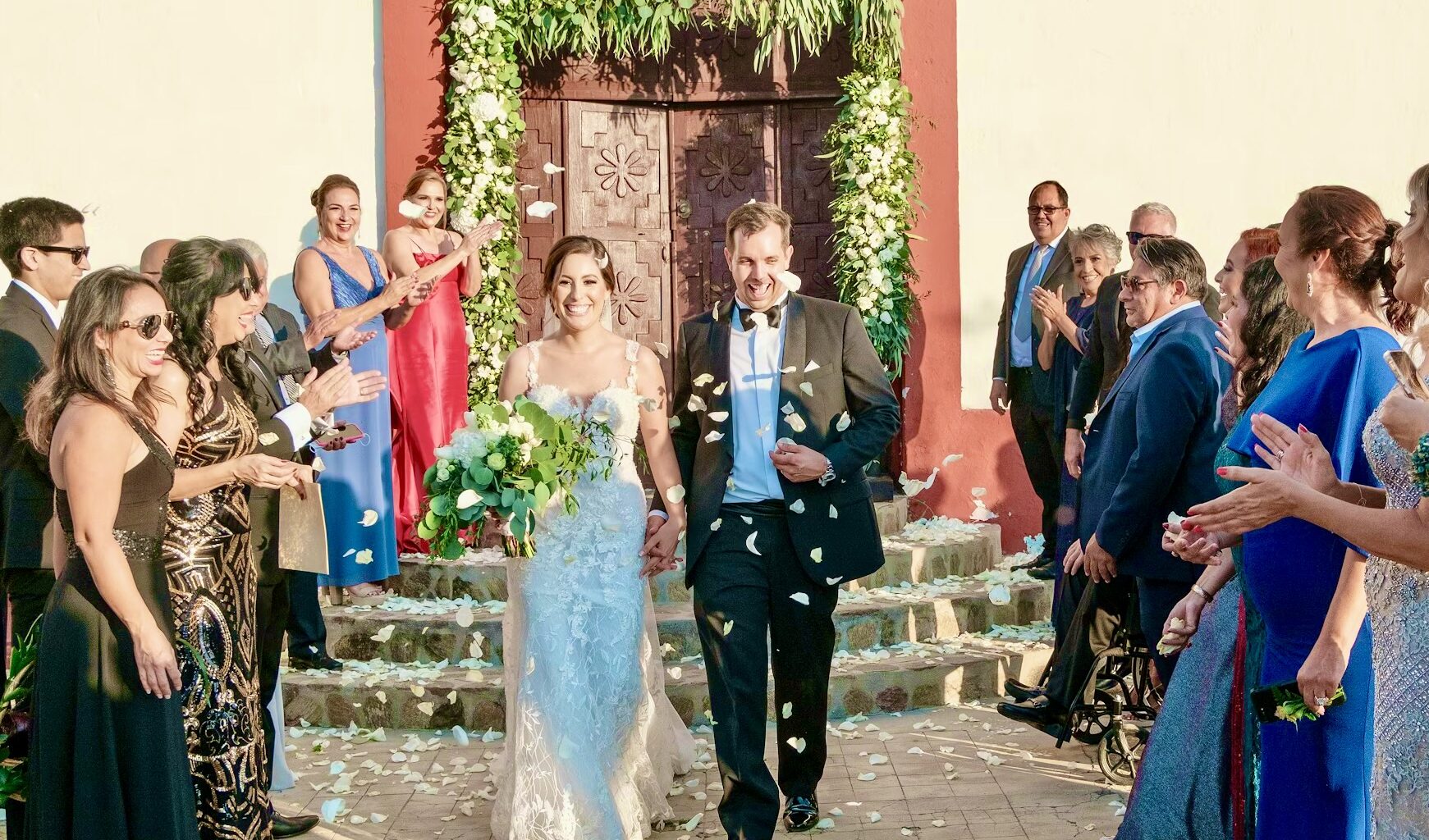
Photo: Asdrubal luna / Unsplash
The Riviera Maya has become one of the most popular destination wedding locations in the Caribbean, and it’s not hard to see why. With direct flights from dozens of cities in the United States and Canada to Cancún International Airport, couples and their guests can be on the beach within an hour of landing.
All-inclusive wedding packages at resorts along this stretch of Mexico’s Quintana Roo coastline start at around US$1,000 for a symbolic ceremony and scale upwards past US$25,000 for larger, fully customized celebrations. Sound like a lot? Well, perhaps… until you realize that the average domestic wedding in the USA now costs US$35,000-plus.
Suddenly, planning a destination wedding in the Riviera Maya doesn’t sound so bad, does it?
Destination Weddings in Riviera Maya
The region’s appeal goes way beyond price, though. Couples can exchange vows on white sand beaches, in jungle clearings, or beside ancient cenotes, with resorts from Puerto Morelos to Tulum offering dedicated wedding coordinators to manage the details.
But one aspect of destination wedding planning that catches many couples off guard is the “room block,” the practice of reserving a group of hotel rooms for your guests at a negotiated rate. Getting this right matters, both for keeping guests together, and for unlocking resort perks such as complimentary ceremony setups, private dinners, and spa credits that are often tied to the number of rooms booked.
Industry professionals and travel advisors alike consistently cite room block logistics as the area where couples most need guidance, and the Riviera Maya’s all-inclusive resort model adds its own wrinkles to the process.
How Room Blocks Work
A room block is essentially an agreement in which a resort holds a set number of rooms for your wedding guests at a fixed rate until a cutoff date, typically 30 to 60 days before the event. In the Riviera Maya, where most luxury resorts operate on an all-inclusive model, the process differs from blocking rooms at a standard hotel back home.
Most mid-range and high-end all-inclusive properties in the region do not offer courtesy holds, the no-commitment blocks sometimes available at domestic hotels. Instead, couples sign a contract specifying a minimum number of rooms, and the resort locks in the nightly rate for the entire booking period. That locked rate is a genuine advantage: even if the resort raises its public pricing in the months leading up to the wedding, guests who book within the block pay the original contracted amount.
It’s a process that should start at least 12 to 16 months in advance, particularly if the wedding falls during the dry season from November through April, when Riviera Maya occupancy rates regularly exceed 85 percent.
It Makes Financial Sense, Don’t You Know
The financial mechanics deserve attention. Since the couple typically signs the contract, they bear responsibility for meeting the minimum room commitment. Most Riviera Maya resorts include a “drop date,” usually about six months out, that allows the couple to reduce unfilled rooms without penalty, though a baseline minimum often still applies.
A practical rule of thumb for estimating block size: count only out-of-town guests, assume roughly 70 percent will attend, divide by two (the average number of guests per room), and add a 10 percent buffer. For a wedding expecting 60 traveling guests, that works out to about 23 rooms.
Splitting the block across two properties at different price points can also help accommodate guests with varying budgets, a common approach at resort clusters like Mayakoba, where Rosewood, Banyan Tree, Fairmont, and Andaz all share the same development.
Perks, Pitfalls, and Practical Advice
The perks tied to room blocks at Riviera Maya resorts can be substantial. Properties like UNICO 20˚87˚ in Akumal reward larger blocks with complimentary private event hours, while others offer free ceremony packages, room upgrades for the couple, or spa discounts when a threshold of paid room nights is met.
At Excellence Riviera Cancun in Puerto Morelos, for instance, a wedding party booking 20 paid room nights qualifies for a complimentary ceremony package. Grand Velas Riviera Maya in Playa del Carmen takes a different approach entirely, offering fully customized weddings with no preset packages, which appeals to couples who want control over every detail. These incentives only apply to rooms booked within the official block, however, so guests who find a slightly cheaper rate on a third-party booking site may inadvertently cost the couple a free reception or ceremony upgrade.
Couples planning a legal ceremony in Mexico, as opposed to a symbolic one, should be aware that both partners must arrive at least three business days before the wedding to complete required paperwork and blood tests; a symbolic ceremony requires only two business days. For those who prefer to skip the administrative requirements, a popular option is to hold the symbolic ceremony in the Riviera Maya and handle the legal paperwork at home before or after the trip.
Whichever route couples choose, the combination of Riviera Maya’s resort infrastructure, its proximity to US departure cities, and the sheer variety of venues available from beachfront gazebos to jungle platforms and rooftop terraces makes a strong case for the region as one of the most practical and rewarding places to plan a wedding abroad.
___________________
Bryan Dearsley is a luxury lifestyles writer, a prolific traveler, and a Co-Founder of the Riley network of luxury lifestyle websites.


