Photo: Jonas Lang / Unsplash
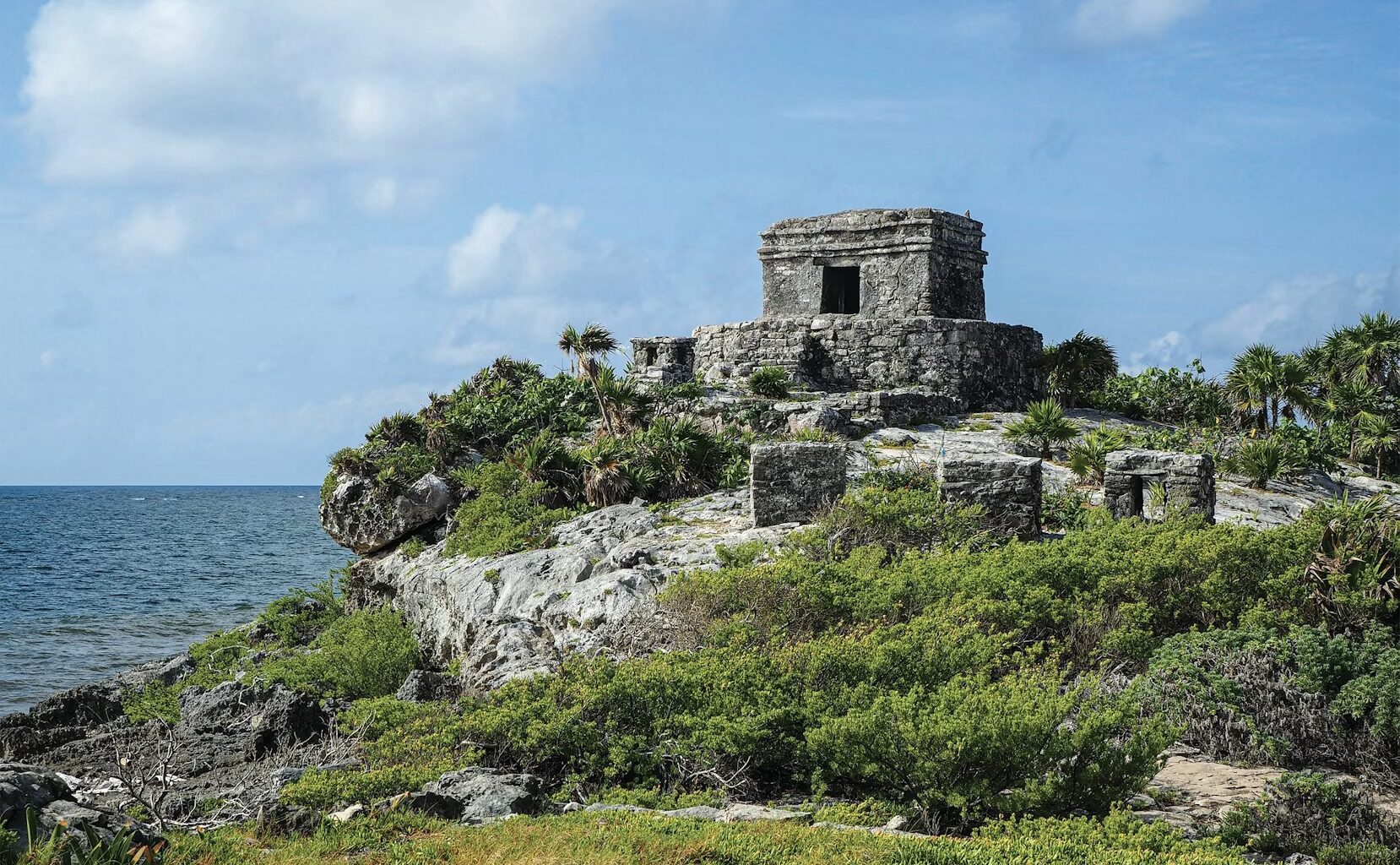
The Tulum Maya ruins are among the best known and most visited archaeological sites in Mexico, and for good reason. This remarkable fortified coastal city rises 40 feet above a stunning stretch of white sand, its gray stone walls a striking contrast against the turquoise Caribbean Sea.
Unlike the jungle-bound pyramids found elsewhere in the Yucatán Peninsula, the archaeological site of Tulum occupies a coastal promontory that once made it a strategic trading hub. Today, it’s a hub of a different sort, attracting more than a million visitors to wander its grounds.
Tulum remains the only walled Maya city built directly on the Caribbean coast. The ancient inhabitants called it Zama, meaning “City of Dawn,” a name that hints at its eastward orientation and the spiritual significance the Maya attached to the rising sun.
Riviera Maya Ruins Tulum
What we see today dates primarily from the Late Post-Classic Period after AD 1200, though archaeological evidence suggests the area was settled centuries earlier. The Spanish first spotted the Tulum pyramids from the sea in 1518, and conquistador Juan de Grijalva described the city as comparable in size to the European city of Seville. The site remained occupied until around 1544, when the Spanish conquest of the northeastern Yucatan brought an end to Maya habitation.
Located 80 miles south of Cancún and 37 miles from Playa del Carmen along Highway 307, the Tulum ruins attract visitors seeking both cultural enrichment and Caribbean beauty.
The site is open daily from 8:00 AM to 5:00 PM, with last entry at 3:30 PM. As of 2025, visitors must pay separate entrance fees totaling approximately 515-625 Mexican pesos (roughly $30-35 USD), which includes admission to Parque del Jaguar, the protected conservation area surrounding the archaeological zone, plus the INAH (National Institute of Anthropology and History) entrance fee for the ruins themselves.
The Beach at Tulum
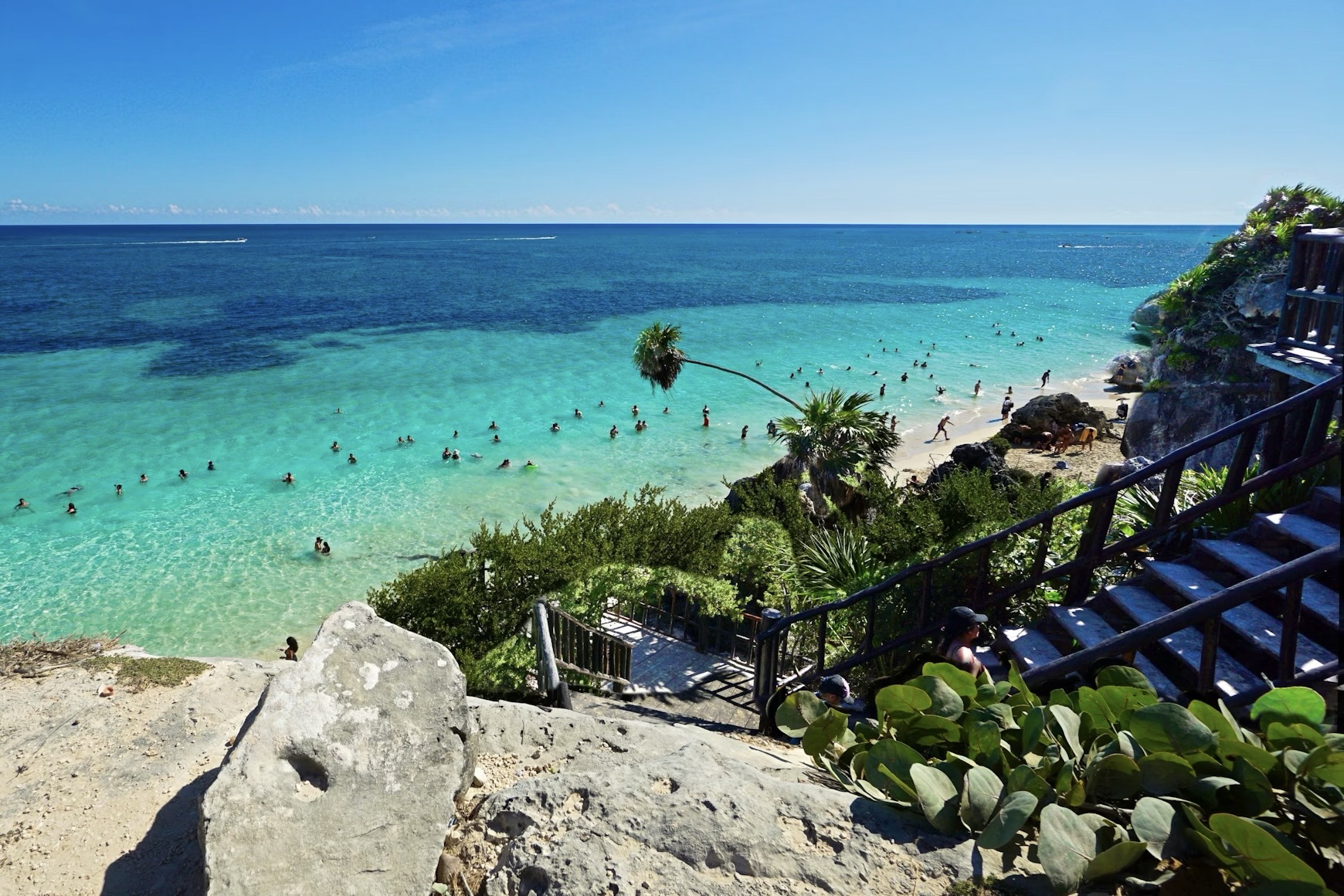
The famous beach below the ruins is as big a draw for visitors as the ancient structures themselves. A wooden staircase descends from the clifftop to Playa Ruinas, a small, protected cove framed by the limestone bluff and the weathered walls above. Swimming here, with the 800-year-old temples above, is an entirely unique experience.
Beach access is through Parque del Jaguar, the conservation park that now manages the coastal area. After exploring the ruins, visitors can walk through the park to reach Playa Ruinas or continue to nearby Playa Pescadores, a slightly larger stretch of sand with calmer waters suitable for swimming. Both beaches feature soft white sand and water in graduated shades of blue, though Playa Ruinas tends to fill quickly during peak hours. Visitors should note that once you exit the archaeological zone into Jaguar Park, re-entry to the ruins is not permitted.
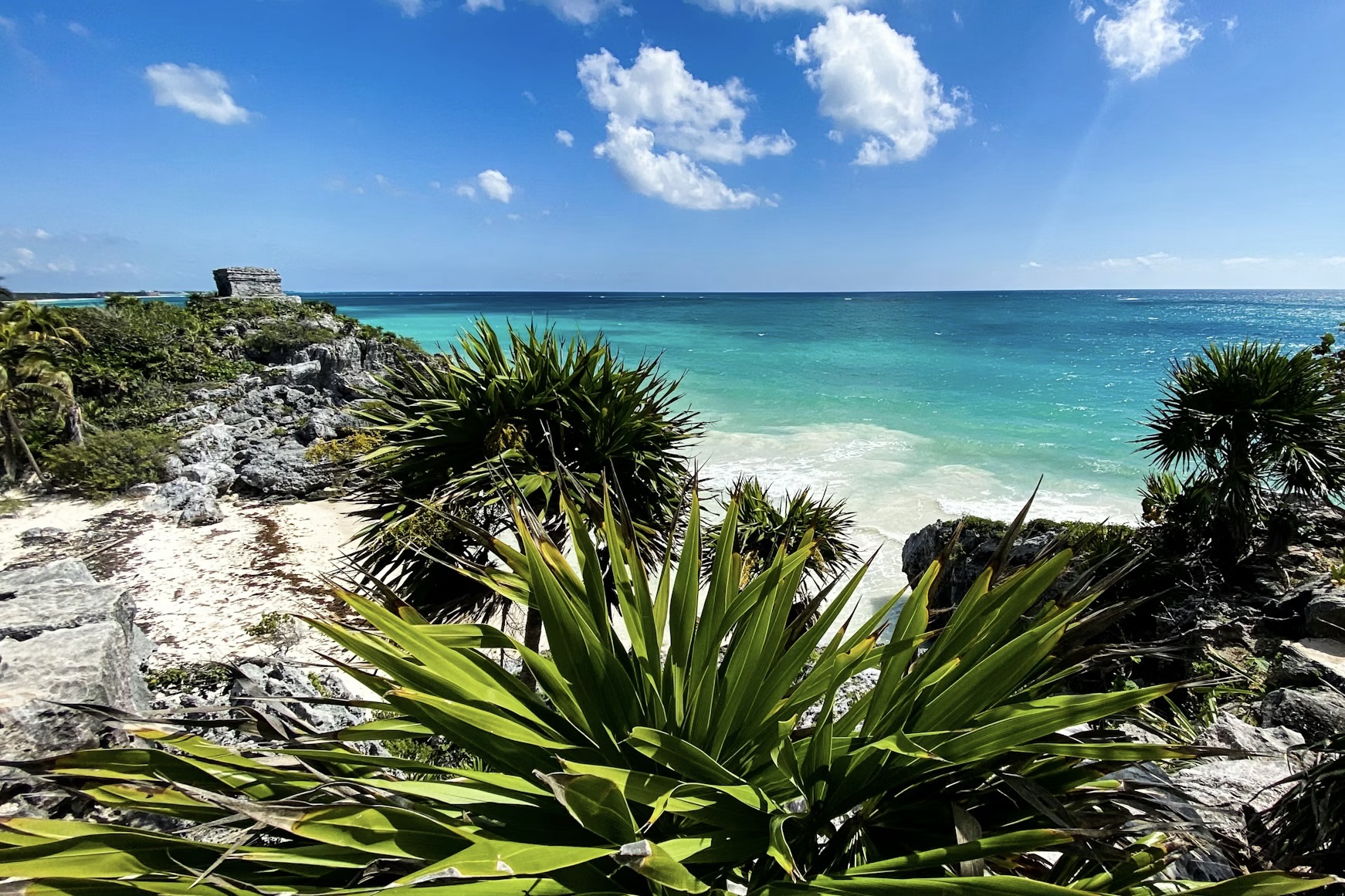
The Caribbean here is generally calm from May through September, with visibility often exceeding 100 feet on clear days. Between October and April, cold fronts from the north can create rougher conditions. Lifeguards monitor the main swimming areas year-round. Those wishing to swim should bring biodegradable sunscreen, as products containing oxybenzone and octinoxate are prohibited due to their harmful effects on the Mesoamerican Reef System, the second-largest barrier reef in the world.
Temple of the Frescoes
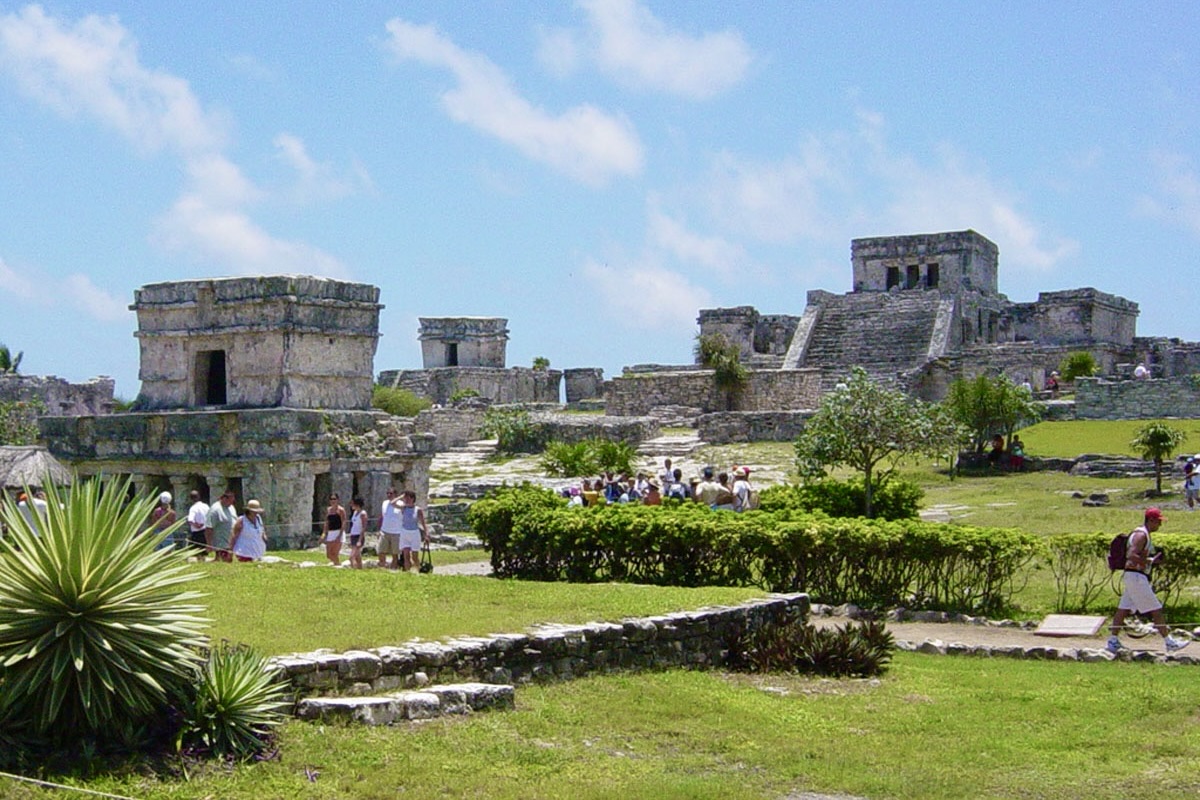
The Temple of the Frescoes (Templo de los Frescos, or Structure 16) represents the artistic high point of the Tulum Maya ruins. Constructed around 1450 and modified several times thereafter, this two-story structure contains some of the best-preserved painted murals in the Maya world. The ground floor features a columned entrance divided by four pillars, above which a double ledge displays three niches containing stucco sculptures.
The central niche holds a representation of the Descending God, a winged figure that appears throughout Tulum and may represent the diving bee god associated with honey production, a major trade commodity for the coastal Maya.
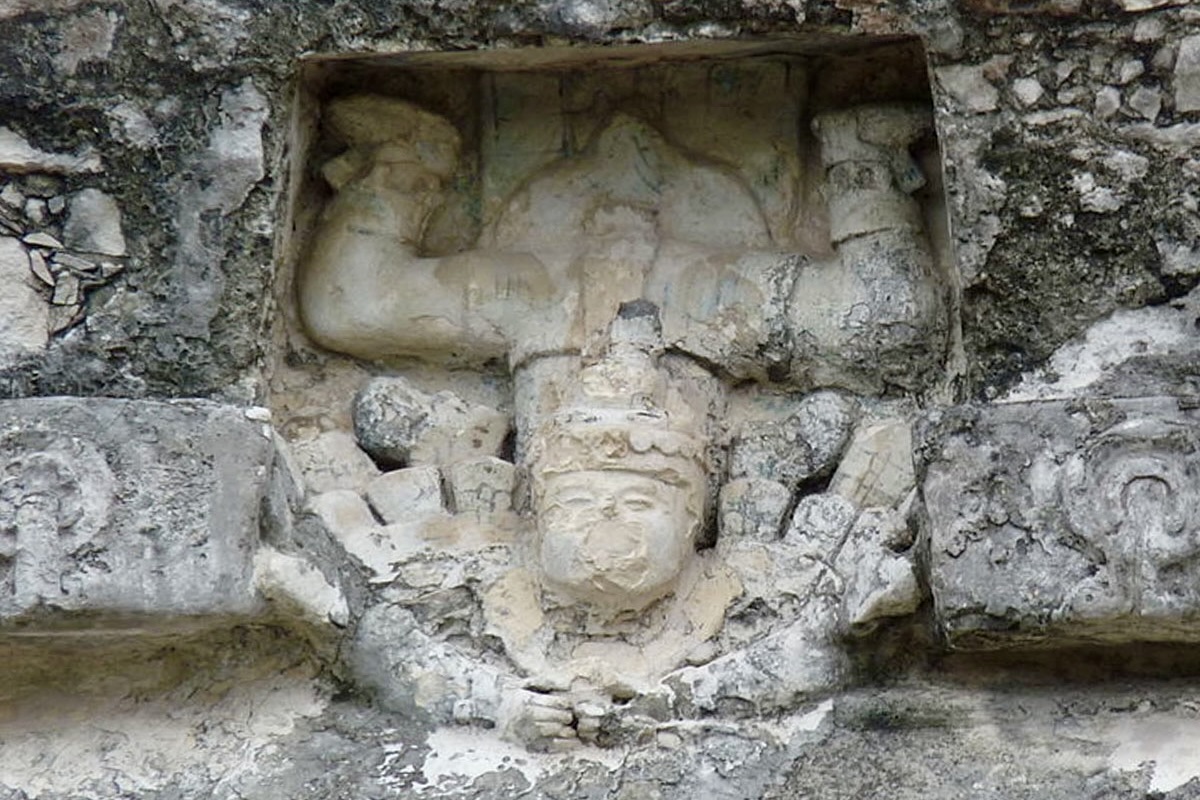
The corner ledges feature large bas-relief masks of Itzamná, the aged Sky God revered throughout the Yucatan. These masks were originally painted in vivid colors, traces of which archaeologists have documented during conservation work.
The interior murals depict Maya deities in codex-style painting, with the rain god Chac and the fertility goddess Ixchel prominent among the figures. A stela standing before the temple on an altar, nearly five feet tall, bears a Post-Classic Maya calendar inscription dating to 1261. Visitors cannot enter the temple, but the exterior sculptures and architectural details remain clearly visible from the roped pathway.
El Castillo
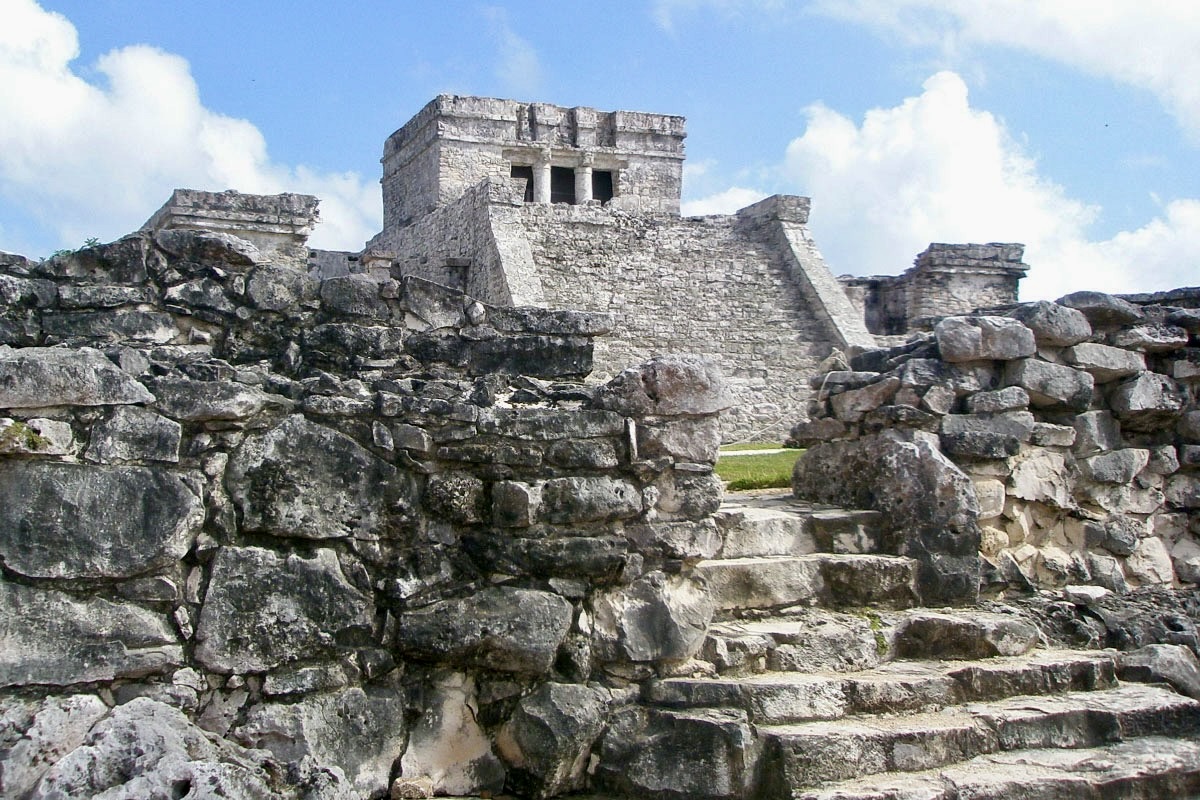
El Castillo (Structure 1) dominates the site from its position at the cliff edge overlooking the sea. At 25 feet tall, this pyramid served multiple functions: ceremonial center, astronomical observatory, and, according to some researchers, a navigational beacon for Maya trading canoes.
Two small windows at the summit aligned so that sailors approaching through the reef could see daylight through both openings when they were on a safe course. The structure evolved through at least three building phases between the 13th and 15th centuries. Broad steps lead to a terrace where a two-room temple once housed rituals and, according to archaeological evidence, occasional human sacrifices.
The temple entrance is divided by two serpent columns, while a stone figure of the Descending God occupies a niche above the central doorway. El Castillo’s position and orientation suggest the Maya designed it to catch the first rays of the equinox sun, fitting for a city named after the dawn.
Temple of the Descending God
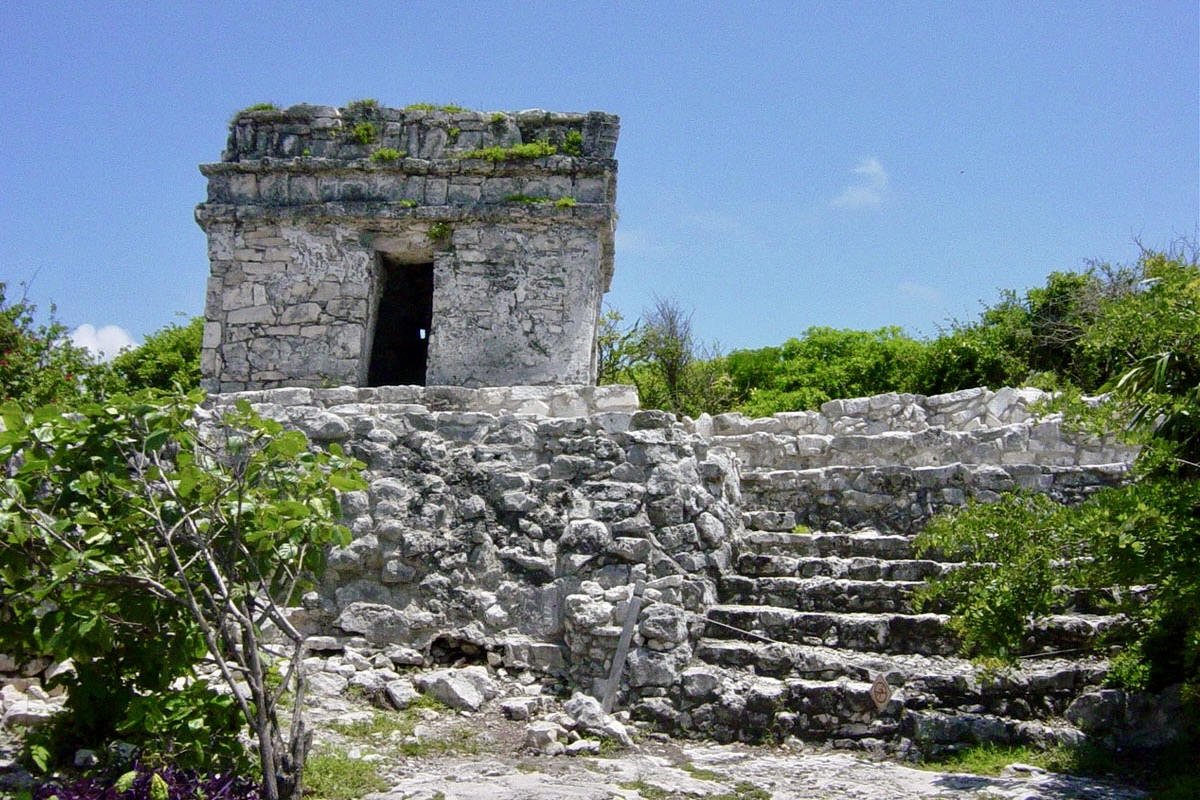
Directly north of El Castillo stands the Temple of the Descending God (Templo del Dios Descendente), a smaller structure notable for its unusual architecture. The walls taper inward from base to top, a construction technique that Maya builders believed provided greater stability. This single-room temple features a stucco sculpture above its entrance depicting the Descending God with wings on his arms and shoulders and a bird’s tail extending behind.
Scholars have proposed various interpretations of this figure: a diving bee representing Tulum’s honey trade, the evening star (Venus) descending into the underworld, the setting sun, or even lightning. Whatever its meaning, the figure appears so frequently at Tulum that some researchers believe the site may have been a major center of worship for this deity.
Nearby, the Temple of the Initial Series (Structure 9) once housed a stela dated to AD 564, the oldest inscription found at Tulum, suggesting the site’s history extends further back than its visible architecture indicates. The original stela now resides in the British Museum in London.
Casa del Cenote
The Casa del Cenote demonstrates the sacred significance of natural water sources in Maya civilization. This structure was built directly over a cenote, one of the limestone sinkholes that provided the ancient Maya with fresh water in a region without surface rivers. According to Maya cosmology, cenotes served as portals to Xibalba, the underworld realm of the dead.
Archaeological excavations revealed human remains within the Casa del Cenote, suggesting the structure functioned as a mausoleum. The proximity to what the Maya considered an entrance to the spirit world made this an appropriate site for elite burials.
While visitors cannot swim in this cenote (the conditions are not suitable for recreational use), its historical and ceremonial importance make it a significant stop within the archaeological zone.
The Walls of Tulum
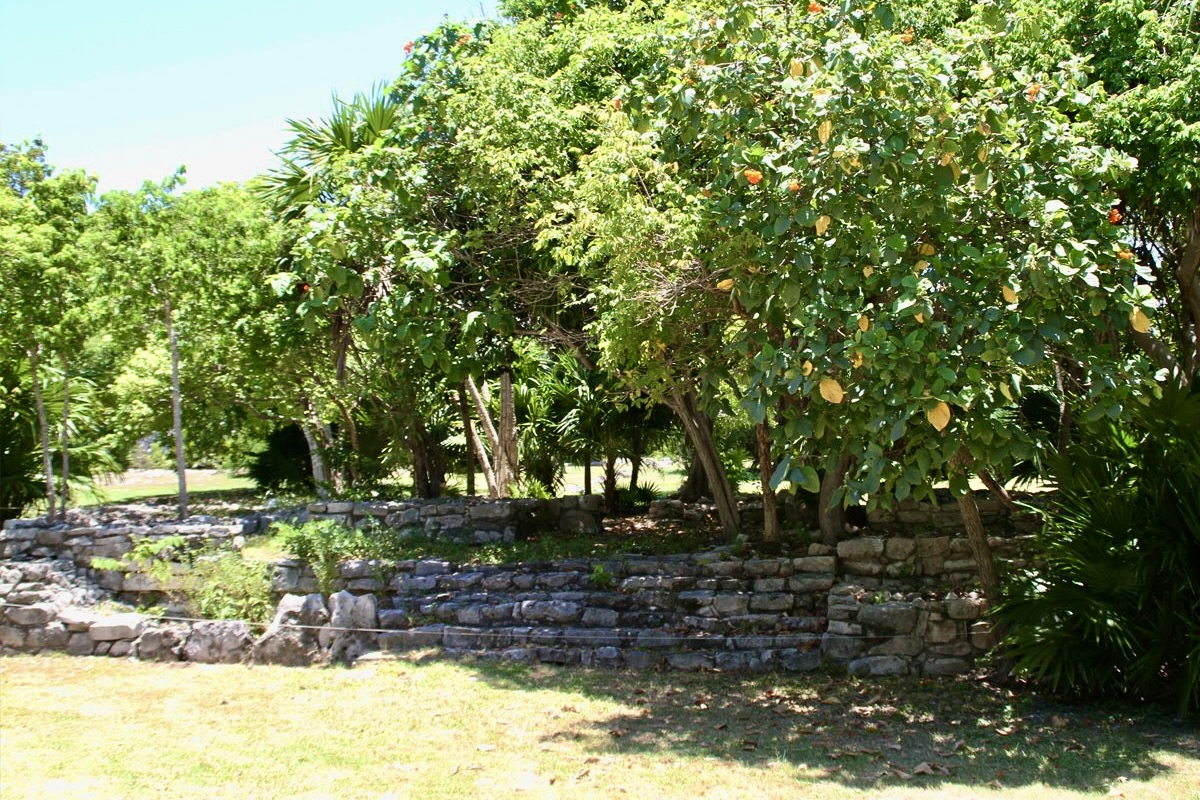
The name “Tulum” derives from the Yucatec Maya word for “wall” or “fence,” and the defensive fortifications remain among the site’s most impressive features. The massive limestone wall encloses an area measuring approximately 1,250 feet by 560 feet on three landward sides, while the Caribbean cliffs provide natural protection on the fourth.
At its original height, the wall stood between 10 and 16 feet tall with an average thickness of 26 feet, substantial enough to repel invaders while also controlling the flow of trade goods entering the city.
The wall contained five narrow gateways, each designed so that only one person could pass through at a time. At the northwestern and southwestern corners, small temples doubled as watchtowers, providing sentries with clear sightlines along both the coast and the inland approaches. A circular walkway protected by a parapet ran along the interior length of the wall, allowing defenders to move quickly to any threatened point.
Guided Tours and Transportation
Organized tours from Cancún, Playa del Carmen, and Tulum town offer convenient transportation with English-speaking guides who provide historical context for the ruins.
Many tours combine Tulum with other experiences: cenote swimming, visits to the nearby ruins at Cobá, or snorkeling at Akumal Bay. Private tours allow for flexible timing and personalized attention, though they cost more than group excursions.
Those traveling independently can reach Tulum by rental car, ADO bus, or colectivo (shared van). The ADO bus station in Tulum town is about two miles from the ruins. Colectivos running along Highway 307 will drop passengers at the Tulum archaeological zone entrance, marked “Zona Arqueológica” rather than “Tulum Centro.” Parking at the site costs approximately 100-200 pesos per vehicle.
Other Tulum Attractions
Tulum Pueblo, the town serving the archaeological zone, offers restaurants, shopping, and nightlife within a short taxi ride of the ruins. The Tulum beach hotel zone stretches south along the coast road to Boca Paila, featuring boutique hotels, spa resorts, and beach clubs built in harmony with the area’s bohemian-luxury aesthetic.
The Muyil archaeological site (also called Chunyaxché) lies approximately 15 miles south of Tulum along Highway 307, within the Sian Ka’an Biosphere Reserve, a UNESCO World Heritage Site. This smaller site features El Castillo, a 56-foot pyramid that ranks among the tallest on the Yucatan coast, along with jungle trails leading to the Muyil Lagoon. Unlike Tulum, Muyil sees relatively few visitors, offering a more contemplative archaeological experience.
The site connects via ancient Maya canals to the Caribbean, and boat tours through the lagoon system allow visitors to float through waterways the Maya once used for trade. Note: As of 2024, Muyil was undergoing restoration work and may have limited access; check the current status before planning your visit.
Cenotes Near Tulum

The Tulum area contains dozens of cenotes, the freshwater sinkholes that provided the ancient Maya with drinking water and served as sites for ritual offerings. Swimming in a cenote remains one of the essential Riviera Maya experiences, offering cool, crystal-clear water in often dramatic underground settings.
Gran Cenote, located about three miles from Tulum town on the road to Cobá, features both open and cavern sections connected by wooden bridges, with excellent visibility for snorkeling among stalactites and freshwater turtles. Cenote Calavera and Cenote Dos Ojos offer more adventurous underground swimming and cave diving opportunities.
Aktun Chen Natural Park, positioned along Highway 307 approximately 25 minutes north of Tulum, combines cenote swimming with a guided walk through a five-million-year-old dry cave and a ten-line zipline circuit through the jungle canopy. National Geographic rated the Aktun Chen cave among the world’s top ten underground walks. The park opens daily from 9:30 AM to 5:30 PM, with combo packages that include all activities priced at approximately $121 USD for adults.
For those venturing further afield, Cenote Ik Kil near Chichén Itzá (approximately 91 miles from Tulum, about a two-hour drive) offers a dramatic open-air swimming experience with vines cascading 85 feet down to the water’s surface. Many visitors combine Ik Kil with a day trip to Chichén Itzá, one of the New Seven Wonders of the World.
FAQs, Facts, Tips & Tactics
To help ensure you get the most out of your time exploring the Riviera Maya Ruins Tulum, here are a few tips and tactics:
- The archaeological site of Tulum operates daily from 8:00 AM to 5:00 PM, with last admission at 3:30 PM.
- Arriving at opening time offers the best experience: cooler temperatures, softer morning light for photography, and far fewer visitors than the midday hours when tour buses arrive from Cancún and Playa del Carmen. Alternatively, the late afternoon hours after 3:00 PM see reduced crowds as most organized tours have departed.
- The entrance complex includes Parque del Jaguar, a conservation area protecting more than 2,500 acres surrounding the ruins.
- The park features a museum, observation tower, restored lighthouse, and approximately 1.25 miles of bike paths.
- From the parking area, visitors walk approximately two-thirds of a mile to the archaeological zone entrance or can take a shuttle for 55 pesos round trip.
- Be prepared for significant walking on uneven terrain. Comfortable closed-toe shoes are essential, as are a wide-brimmed hat, sunscreen, and ample water, since there is minimal shade within the ruins.
- For safety and preservation reasons, climbing on the structures has been prohibited for many years.
- Plastic bottles, backpacks larger than standard daypacks, drones, and smoking are not permitted within the archaeological zone. Lockers are available at the entrance for a small fee.
___________________
Bryan Dearsley is a luxury lifestyles writer, a prolific traveler, and a Co-Founder of the Riley network of luxury lifestyle websites.