Photo: Spencer Watson / Unsplash
As anyone who has ever been there will vouch, Tulum is one of the best luxury travel destinations in Mexico. And what’s not to like? Ancient Mayan ruins, world-class dining experiences, and eco-conscious resorts interested in satisfying the concerns of folks interested in sustainable travel.
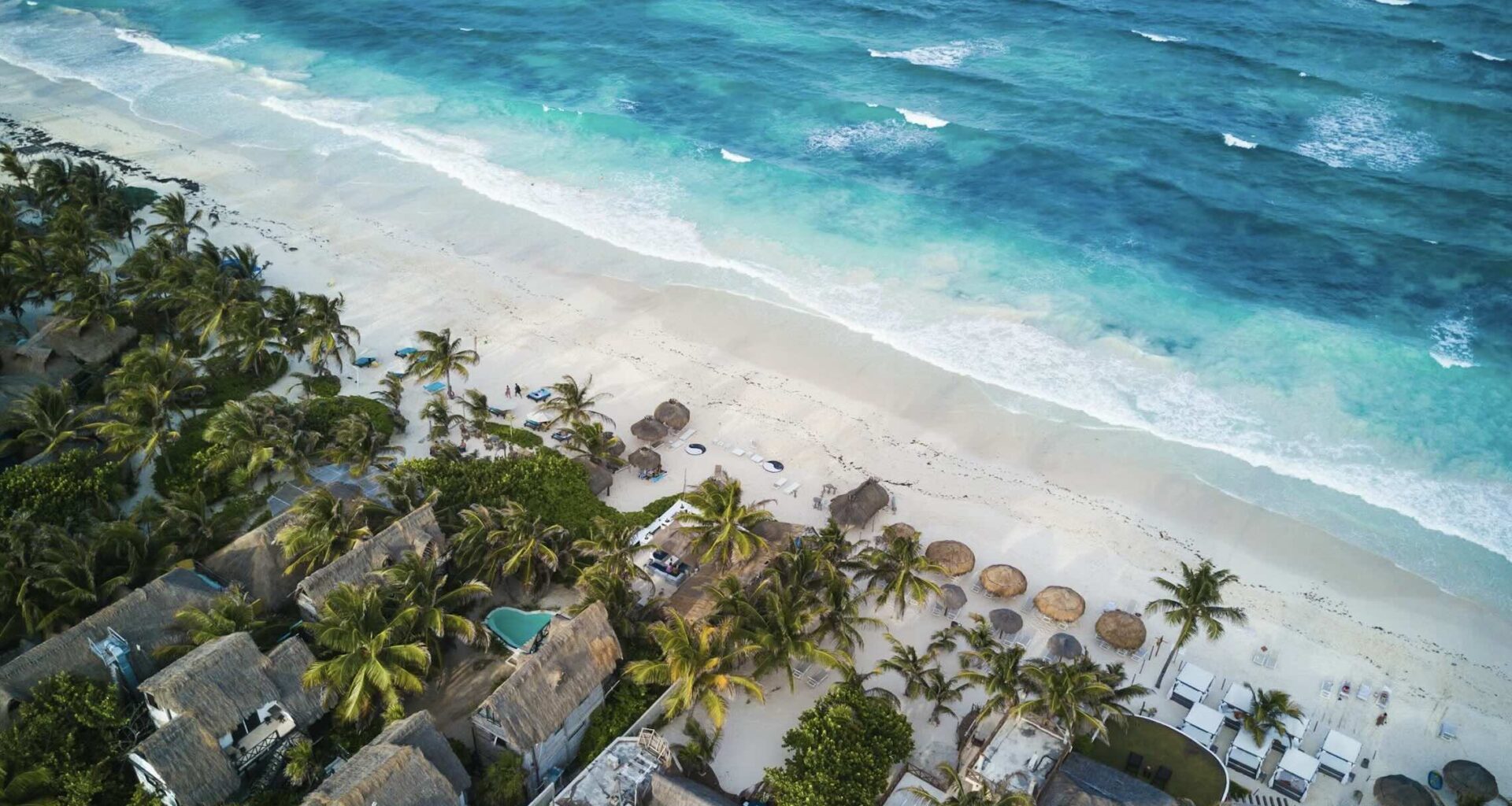
But what originally attracted visitors to this corner of the Yucatán Peninsula (and arguably still does) are its remarkable beaches. These Caribbean shores feature impossibly fine white sand, water in shades of blue that shift from aquamarine to deep turquoise, and that quintessential tropical backdrop of swaying palms and thatched roof palapas.
Whether you like fast-paced beach adventures like kite-surfing or simply kicking back in a fancy beach club, here’s our take on the best public beaches in Tulum to help you plan your Mexican Caribbean escape.
The Best Beaches in Tulum, Mexico
Playa Paraíso
If you’re curious as to how Tulum became the popular high-end beach destination it is today, look no further than Playa Paraíso. This extraordinary stretch of powder-white sand curves along the coastline, backed by water that transitions through countless shades of blue and a row of palm trees that sway gently in the Caribbean breeze.
Located less than a mile from the Tulum Archaeological Site, Playa Paraíso sits in a central position along Tulum’s north beach, flanked by Playa Las Palmas to the north and Playa Ruinas to the south. This proximity makes it an ideal base for exploring multiple beaches, as these stretches of sand blend seamlessly into one another.
Several local operators offer snorkeling excursions from Playa Paraíso, including tours to nearby coral reefs where you might encounter sea turtles and tropical fish. El Paraiso Hotel Tulum operates one of the original beach clubs here, with their restaurant opening at 8 a.m. for breakfast and the beach club running from 10 a.m. to 6 p.m. Expect to pay around 500 pesos (approximately $25-30 USD) for a set of beach beds or lounge chairs with no minimum spend required, though prices can vary seasonally.
One practical note: like many Riviera Maya beaches, Playa Paraíso can experience sargassum seaweed during warmer months, typically between May and October. Many beach clubs work to keep their areas clean, but it’s worth checking recent conditions if this is a concern. The best weather typically falls between December and April, during the dry season.
Playa Ruinas
Few beaches in the world can claim to have ancient ruins perched on cliffs directly overhead, but Playa Ruinas delivers exactly that. The Tulum Archaeological Site attracts over two million visitors annually, making it the third most visited archaeological zone in Mexico, and the small beach at its base offers one of the most photogenic settings on the Caribbean coast.
The beach sits beneath El Castillo, the watchtower that once served as both a lighthouse and ceremonial structure for the ancient Maya. To reach the sand, follow the wooden staircase that descends the cliff near the main pyramid. The ruins themselves open at 8 a.m. and close around 3 p.m., with last entry typically around 3:30 p.m. Current entrance fees run approximately 80-100 pesos for the ruins plus a separate fee for the national park.
Because Playa Ruinas is within the archaeological zone, you won’t find any services on the beach itself: no restaurants, chair rentals, or facilities. Bring whatever you need for your time there, including water and sunscreen. The beach opens around 10 a.m. and provides a welcome opportunity to cool off after touring the ruins.
For the best experience, arrive early in the morning before tour buses begin arriving around 10 or 11 a.m. The early hours offer smaller crowds and more comfortable temperatures for exploring both the ruins and the beach below.
Playa Pescadores
Continue walking south along the shore from Playa Ruinas and you’ll arrive at Playa Pescadores, another exceptional beach along Tulum’s main coastal stretch. The beach shares the same remarkable features as its neighbors with the bonus of distant views of the archaeological site perched on its clifftop.
The name translates to Fisherman’s Beach, a reference to the working fishing boats that still launch from this shore each morning. Beyond the fishing activity, you’ll find operators offering snorkeling tours to nearby reefs where sea turtles and stingrays are common sights.
One of the advantages of Tulum’s beach geography is that all these stretches of sand connect to one another. If one section feels too crowded, simply stroll along the shoreline until you find a quieter spot. Maia Restaurant is right on the sand here, offering toes-in-the-beach dining with a menu featuring fresh ceviche, fish tacos, and seafood platters. They serve breakfast as well, making it an option for an entire beach day.
If arriving by car, the coastal road running parallel to the beach zone typically has parking options scattered along its length. Several lots charge modest fees, and you can access the beach from multiple points along the main road.
Playa Santa Fe
About half a mile south of the Tulum ruins, Playa Santa Fe is a more developed beach experience with proper facilities including bathrooms and showers. This makes it one of the more convenient options for spending a full day on the sand, though the amenities also mean larger crowds during peak hours.
One of the pleasures of Playa Santa Fe is its proximity to the archaeological site. From the beach, you can see the tops of the ancient towers rising above the treeline, a view you get without paying the ruins entrance fee. The turquoise water and white sand are exceptional, but that glimpse of history in the distance adds something special to the setting.
Several beachfront restaurants and food stalls operate along this stretch, allowing for all-day visits without leaving the sand. La Diosa Tulum, positioned on the border between Playa Santa Fe and Playa Pescadores, offers reliable food and service.
Playa Las Palmas
At the northern end of Tulum’s prime beach zone, Playa Las Palmas is the last major beach before the coastline continues toward Akumal. This relatively quiet stretch features a rocky outcrop on its northern boundary and uninterrupted soft sand extending south toward Playa Pescadores, Playa Santa Fe, and Playa Paraíso.
What distinguishes Playa Las Palmas from its busier neighbors is its comparatively peaceful atmosphere. Fewer services mean fewer crowds, though you’ll need to pack in whatever you need for the day unless you’re willing to walk to the more developed beaches to the south. The water maintains that same baby-blue clarity found throughout Tulum’s beach zone.
X’cacel Beach
If you’re willing to venture beyond Tulum’s main beach strip, X’cacel (pronounced “Ish-kah-sell”) is one of the most rewarding coastal experiences in the region. Located about 20 minutes north of Tulum between the towns of Chemuyil and the Xel-Há water park, this protected natural area remains one of the few undeveloped beaches along the Riviera Maya.
X’cacel holds tremendous ecological importance as a sea turtle nesting sanctuary. Each year from April through October, hundreds of loggerheads and green sea turtles come ashore to lay their eggs in the deep, soft sand. Conservation teams from the Xcacel-Xcacelito Área Natural Protegida Estatal monitor nesting sites throughout the season, with biologists recording nearly 1,250 turtle nests during the 2024-2025 season. A portion of every entrance fee goes directly toward these conservation efforts.
The sanctuary enforces strict rules to protect the ecosystem: no processed foods, no chemical sunscreens (biodegradable only), and visitors must bring water in reusable containers. Swimming is permitted in designated areas where conditions are safe, and snorkeling can be excellent depending on water clarity, so tropical fish, rays, and occasionally turtles can be spotted right off the beach.
A small cenote sits a short walk from the beach and is included in the entrance fee. The combination of a protected beach, swimming hole, and potential wildlife sightings makes X’cacel one of the most complete natural experiences near Tulum.
Because the beach operates as a nature reserve, you won’t find restaurants, chair rentals, or shade structures. Pack everything you need, including towels, umbrella, and food. The lack of development is precisely what keeps X’cacel so special, and what keeps the crowds manageable.
Playa Akumal
About 30 minutes north of downtown Tulum, the small town of Akumal has become famous for one thing above all else: the opportunity to swim with wild sea turtles. The name itself comes from the Mayan word meaning “Place of the Turtles,” and the creatures have been returning to these five beautiful bays for centuries to feed on the abundant seagrass that grows in the shallow waters.
Akumal Bay was designated a protected area in 2016, and regulations now govern how visitors can interact with the turtles. Independent snorkelers are limited to the first 150 feet from shore, while those wanting to venture into the main snorkeling circuit must go with a certified guide and wear a life jacket. Numerous dive shops and tour operators line the beach, offering guided experiences that include equipment and often photography.
Beach access currently requires payment through one of the establishments controlling entry points; expect around 120 pesos (about $6 USD) for basic beach access, with guided turtle snorkeling tours running additional fees. Chemical sunscreens are prohibited in the water, so bring biodegradable alternatives or plan to skip the lotion if you’re swimming.
Beyond the turtle experience, Akumal makes an excellent destination for families. The small town offers restaurants, shops, and tour operators, with beaches featuring gentle waves and shallow water suitable for children. Nesting season runs from April through October, with hatching typically occurring from August through early October.
Playa Kantenah
Just north of Akumal, about 25 minutes from downtown Tulum, Playa Kantenah curves around a quiet, secluded bay that ranks among the most peaceful on this coast. The golden-tinted sand stretches in a gentle arc, with calm turquoise waters rolling onto shore, a setting that feels more private than the busier beaches closer to Tulum’s center.
While the beach is technically public and free to access, it sits directly in front of UNICO 20°87° Hotel Riviera Maya, a AAA Five Diamond all-inclusive adults-only resort. The property helps maintain the beach’s pristine condition. Hotel guests enjoy wait service for snacks and beverages delivered to private lounge chairs; independent visitors will need to bring their own provisions but can still enjoy this beautiful stretch of coastline.
Sian Ka’an Biosphere Reserve
One of Tulum’s greatest assets is its proximity to the Sian Ka’an Biosphere Reserve, a UNESCO World Heritage Site covering some 1.3 million acres of protected jungle, mangroves, wetlands, and coastline. The reserve’s name means “Origin of the Sky” in Mayan, and the description fits as this is one of the last truly wild stretches of Caribbean coast in Mexico.
Sian Ka’an shelters an extraordinary diversity of wildlife, including jaguars, ocelots, pumas, manatees, crocodiles, dolphins, sea turtles, and more than 300 species of birds. The reserve encompasses 120 kilometers of coastline, much of it featuring beaches that have remained completely undeveloped.
Some beaches within the reserve can be reached via parking areas accessible by car (a high-clearance vehicle is strongly recommended), while others require more adventurous approaches, sometimes with a guide. The beaches closer to entry points may have a few other visitors, but because reaching the reserve requires effort, you’ll find far more privacy than at Tulum’s central beaches.
Punta Allen
I’ve got an adventurous spirit, the journey to Punta Allen rewards patience with some of the best beaches in the Riviera Maya. This small fishing village sits at the tip of the Boca Paila Peninsula, deep within the Sian Ka’an Biosphere Reserve, about two to three hours south of Tulum depending on road conditions.
The drive itself requires preparation. The road from Tulum along the Tulum-Boca Paila route is unpaved and can be extremely rough, with large potholes and sections that wash out during rainy season. A vehicle with good clearance is essential; rental sedans are not recommended. Some travelers opt to reach Punta Allen by boat tour instead, which eliminates the challenging drive while adding wildlife viewing opportunities along the way.
Once you arrive, Punta Allen feels worlds away from the tourist development to the north. This is a village where cell service is limited, electricity can be unreliable, and the pace of life revolves around fishing and the rhythms of the sea. The beaches are among the most untouched you’ll find anywhere in Mexico: white sand, clear water, and virtually no crowds.
Wildlife encounters are another major draw. The waters around Punta Allen are excellent for spotting dolphins, sea turtles, and the occasional crocodile. Local fishermen offer boat tours into the bay and lagoon systems of Sian Ka’an.
The village has a handful of palapa-topped restaurants serving fresh-caught seafood. Muelle Viejo is a local favorite, with beachfront seating and a menu featuring Caribbean-style preparations of the day’s catch: expect specialties like ceviche, grilled fish, and during lobster season, the local spiny lobster. Note that Muelle Viejo is one of the few restaurants open for dinner; many others in Punta Allen serve lunch only.
___________________
Bryan Dearsley is a luxury lifestyles writer, a prolific traveler, and a Co-Founder of the Riley network of luxury lifestyle websites.