Photo: Jorge Fernández Salas / Unsplash
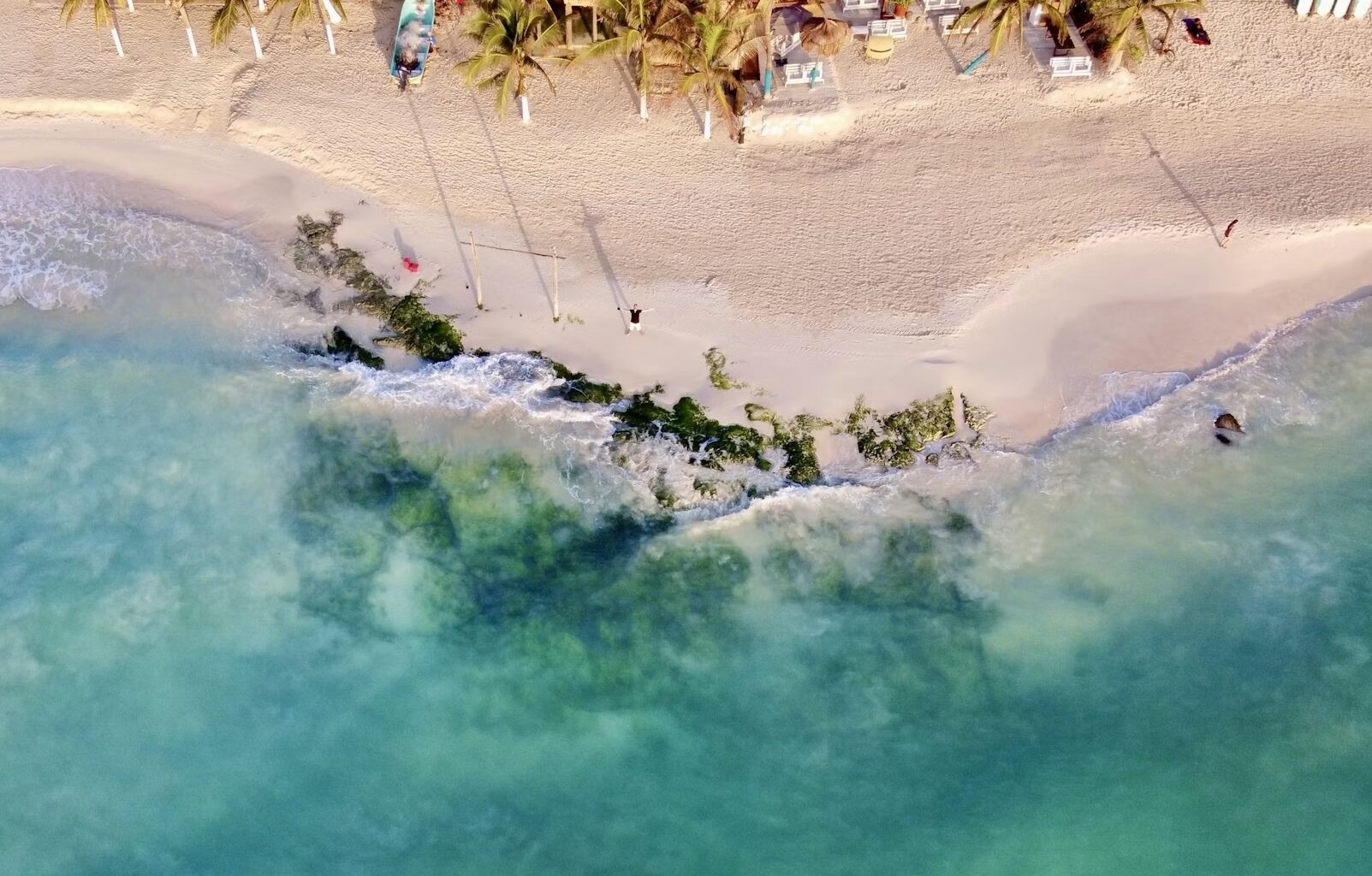
Of Mexico’s nearly 6,000 miles of coastline, few stretches can quite match the country’s Caribbean Sea region when it comes to magnificent tropical beaches. In fact, the beaches in and around Playa del Carmen represent some of the finest stretches of sand not just in Mexico, but in the entire Western Hemisphere.
Handily located just 40 miles south of Cancun International Airport, Playa del Carmen is considered the heart of the Riviera Maya, a magnificent 80-mile corridor of Caribbean coastline that’s become increasingly popular with luxury travelers.
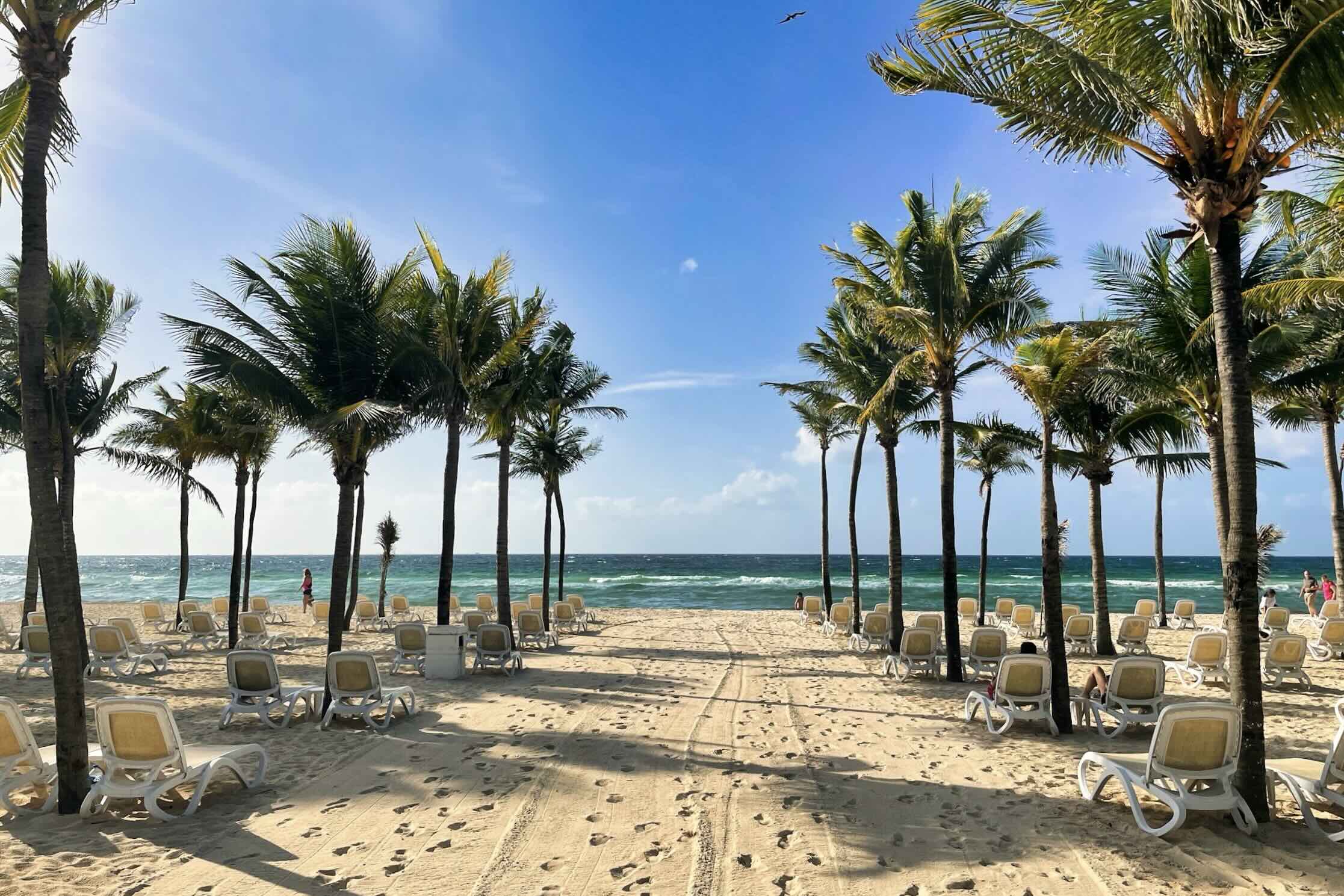
Stretching from Puerto Morelos in the north to Tulum in the south, the region attracts millions of visitors with its trademark turquoise waters, flour-white sand, and dense palm groves.
Many of them end up in Playa del Carmen. If that sounds like something you’ll be doing (or hey, maybe you’re already here!), check out our handy guide to the best beaches in Playa del Carmen Mexico. From luxury resort strands to secluded coves that remain relatively unknown to most visitors, pack your reef-safe sunscreen and discover why this corner of the Caribbean continues to lure travelers from around the world.
The Best Beaches in Playa del Carmen
Playa Mamitas
No discussion of nice beaches in Playa del Carmen should begin without mentioning Mamitas. Situated directly in front of downtown’s primary tourist zone between Calle 28 and Calle 30, this beach draws the largest crowds precisely because of its convenience. In fact, guests at properties like the Grand Hyatt Playa del Carmen can reach the sand in minutes on foot.
The beach itself is public and free to access, though most folks opt to rent loungers and umbrellas from one of several beach clubs operating along the shore, including the classy Mamitas Beach Club that lends the beach its name. Day passes typically run between $30 and $100 USD depending on the season and package selected, with food and beverage minimums often included.
What makes Mamitas so popular? On addition to the location, the water here maintains that electric Caribbean blue throughout the year, and the sand is soft enough to sink into. Fifth Avenue (Quinta Avenida), Playa del Carmen’s pedestrian shopping and dining corridor, is just blocks inland, making it easy to transition from beach time to party time.
Playa Punta Esmeralda
If you’re seeking out what the locals consider the nicest beach in Playa del Carmen, the journey north to Playa Punta Esmeralda is worthwhile. Located near Calle 110 Norte 15 minutes’ drive from the tourist center, this beach offers something genuinely rare: a freshwater cenote that empties directly into the Caribbean Sea.
The cenote creates a shallow, crystal-clear pool ideal for children and those who prefer calmer water than ocean waves provide. The beach itself curves gently, creating a wide arc of white sand with ample space even during busy weekends. Properties in the area include the Paradisus Playa del Carmen, though the beach maintains a distinctly local character that differs markedly from the resort-heavy shores to the south.
It’s worth noting that no beach clubs operate here, so bringing food, water, and shade is essential. Vendors walk the beach selling snacks and fresh fruit, but services remain limited. The trade-off is genuine tranquility and a beach that feels authentically Mexican rather than resort-manufactured.
Playacar Beach
Directly south of the Cozumel ferry terminal, the gated community of Playacar encompasses some of the most exclusive real estate in Playa del Carmen. The community is home to properties like the Iberostar Selection Paraiso Lindo and the Riu Palace Riviera Maya, but its greatest asset is a beach that stretches for nearly two miles with remarkably few crowds.
While vehicles cannot enter Playacar without a reservation, pedestrians may walk freely onto the beach via the public access point near the ferry terminal. (It’s worth noting that all beaches in Mexico are federal property, guaranteeing public access regardless of adjacent development.
The sand here appears almost unnaturally white, and the beach maintains significant width, often 100 feet or more from the waterline to the vegetation. Because no public facilities exist on this stretch, you’ll need to bring everything needed for the day. The relative isolation is the point; this is beach time without the crowds or constant vendor approaches of busier beaches.
Playa Publica 88
Blue Flag certification represents an international standard for beach quality, and Playa 88 is one of only three Blue Flag beaches in Playa del Carmen. Located just south of Punta Esmeralda near Calle 88 Norte, this lovely beach attracts a mix of locals and visitors seeking cleaner, well-maintained shores.
The Blue Flag designation requires meeting strict criteria not just for water quality and environmental management, but also safety services and amenities. Playa 88 offers public restrooms and showers, a rarity in many area beaches, while maintaining the soft white sand and warm, gentle water that characterize the best Riviera Maya beaches.
Reaching Playa 88 requires a taxi or bicycle, as the distance from downtown makes walking impractical. The remoteness does, however, mean fewer vendors and less crowding, particularly on weekdays.
Mayakoba Beach
The 1,600-acre master-planned resort community of Mayakoba, located 25 minutes north of Playa del Carmen, is the most exclusive beach experience in the Riviera Maya. Four luxury properties share this stretch of coastline: Rosewood Mayakoba, Banyan Tree Mayakoba, Andaz Mayakoba, and Fairmont Mayakoba.
The beach itself extends for roughly a mile, with sand so white it almost appears bleached, and water in that distinctive Caribbean gradient that transitions from turquoise to deep blue. Guests at the four resorts access the beach via pontoon boats that traverse the property’s network of freshwater lagoons and mangrove channels, an experience unique in the region.
While technically public like all Mexican beaches, practical access requires either a resort reservation or arriving by boat. The experience justifies the effort or expense, though. Pristine conditions, professional beach service, and some of the most visually striking shoreline anywhere in Mexico. Each resort also operates its own beachfront restaurant, with Rosewood’s La Ceiba and Andaz’s Casa Amate offering particularly noteworthy dining.
Playa Maroma
Travel + Leisure magazine has repeatedly named Playa Maroma among the world’s best beaches, and the accolades are spot on. This crescent-shaped bay, 20 minutes north of Playa del Carmen, offers conditions approaching perfection: fine white sand, calm turquoise water, and a backdrop of native palms.
Two major resorts dominate the beach: Secrets Maroma Beach Riviera Cancun, one of the area’s best 5-star resorts; and El Dorado Maroma, both adults-only properties. El Dorado Maroma is especially interesting as it features overwater bungalows that extend into the Caribbean in French Polynesian style.
Public access exists, though reaching the sand without a resort booking requires some determination. The reward is a beach that genuinely merits its reputation, with water clarity often exceeding 80 feet of visibility and sand soft enough to make shoes seem unnecessary for an entire vacation.
Xpu-Ha
Approximately 20 minutes south of Playa del Carmen, near the small resort community of Puerto Aventuras, Xpu-Ha(pronounced “shpu-HA”) offers what many consider the most authentic local beach experience in the region. The water here takes on a slightly different character, more aquamarine than turquoise, and the atmosphere remains decidedly casual.
Several small palapa restaurants operate directly on the sand, including La Playa Xpu-Ha and Xpu-Ha Beach Club, where fresh ceviche and cold beer cost a fraction of resort prices. The calm, shallow water makes Xpu-Ha ideal for kayaking, stand-up paddleboarding, and snorkeling, and equipment rentals are available from the beach clubs.
The beach sits just off Highway 307, roughly midway between Puerto Aventuras and the Hotel Riviera Maya. Early morning visitors often encounter yoga groups practicing on the sand, while weekend afternoons bring local families and pickup beach volleyball games. Ideal for those seeking the Riviera Maya at its most relaxed and unpretentious.
Akumal Beach
The name Akumal translates from Mayan as “place of the turtles,” and this beach, roughly 25 miles south of Playa del Carmen, lives up to that designation. Three species of sea turtles (green, loggerhead, and hawksbill) nest here annually, and the calm bay waters make it one of the most reliable locations in the Caribbean for swimming alongside these ancient creatures.
Akumal comprises five distinct beaches, with Akumal Bay (the main beach) offering the most developed infrastructure. The Centro Ecologico Akumal operates conservation programs and regulates turtle interactions, requiring visitors to wear life vests and follow strict guidelines designed to protect the animals. Equipment rental and guide services are available from numerous operators along the beach.
Akumal also functions as a proper village with restaurants, dive shops, and small hotels lining the beach road. There’s also a popular 5-star resort here worth checking out, too: Bahia Principe Luxury Akumal.
The Half Moon Bay area to the north offers excellent snorkeling over the Mesoamerican Barrier Reef, the world’s second-largest reef system. Increased popularity has led to crowding, but the multiple beaches ensure space can usually be found.
Sian Ka’an Biosphere Reserve
UNESCO designated Sian Ka’an a World Heritage Site in 1987, recognizing the 1.3-million-acre reserve as one of Mexico’s most significant natural areas. While technically closer to Tulum than Playa del Carmen (it’s roughly 90 minutes by car), no guide to regional beaches would be complete without mentioning these protected shores.
The beaches within Sian Ka’an remain essentially unchanged from what the ancient Maya would have witnessed. No hotels, no restaurants, no vendors… just miles of undeveloped coastline backed by mangroves and coastal scrub forest.
Access requires either a guided tour through the reserve or a rugged vehicle capable of navigating the unpaved roads. And visitors must bring all supplies, including water, food, and sun protection, as no facilities exist within the reserve. The reward is experiencing what the entire Quintana Roo coast once looked like: wild and profoundly peaceful.
Playa hac Mool
Located within Cancun’s Hotel Zone rather than near Playa del Carmen proper, Playa Chac Mool merits inclusion for travelers staying in the region or making day trips north. This public beach sits at kilometer 10 of Boulevard Kukulcan, backed by major resorts but offering free access to all.
The beach features the bone-white sand and rolling turquoise waves that define Cancun’s Caribbean coast. Public facilities include restrooms, and numerous vendors rent out beach loungers and umbrellas. Restaurants and bars operate along the shore, though prices reflect the resort location.
What distinguishes Chac Mool is the wave action. Here, the open Caribbean exposure creates surf conditions rare in the more protected waters around Playa del Carmen. Swimming requires some caution, particularly during winter months when north swells increase wave size, but the beach provides a legitimate option for those seeking a bit more energy from the ocean.
Playa Paraiso, Tulum
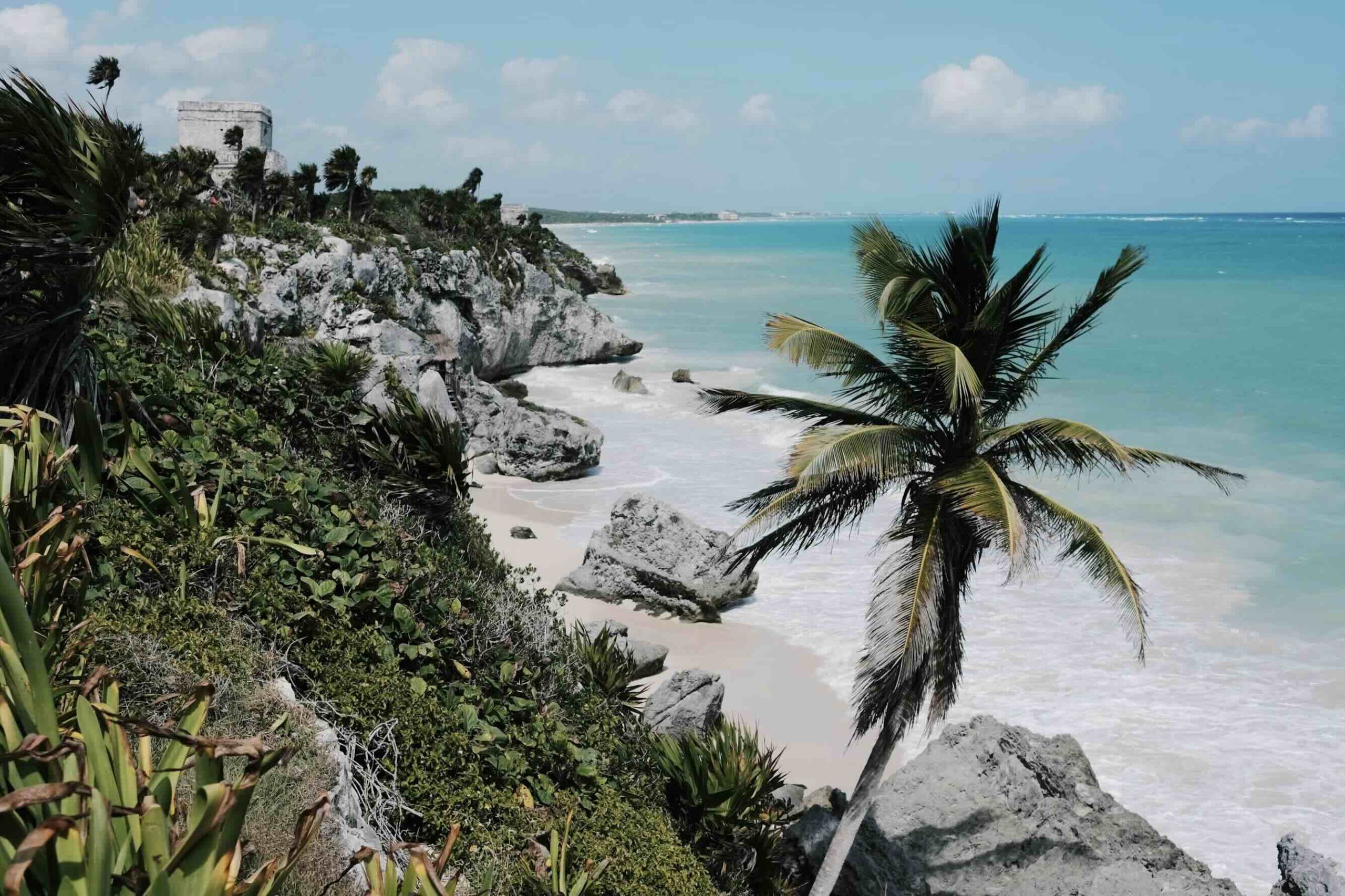
Sure, the 45-minute drive south from Playa del Carmen to Tulum traverses an unremarkable stretch of Highway 307. But the destination rewards the journey. Playa Paraiso sits directly below Tulum’s archaeological zone, where 13th-century Maya ruins perch dramatically on a cliff overlooking the Caribbean. It’s a combination of beach and history found nowhere else in Mexico.
Rightly considered one of the best beaches in the Riviera Maya, the beach itself delivers on its name of “paradise” in Spanish: it’s a wide strip of powder-white sand, impossibly blue water, and that iconic backdrop of ancient stone walls and temples. Instagram has made this beach famous, and crowds reflect that popularity, particularly between 10 am and 4 pm. Early morning visitors enjoy dramatically better conditions.
Beach clubs operate along this stretch, including Ziggy Beach Club and several others, offering loungers, food, and beverage service. The ruins themselves are accessible via a steep staircase that descends from the archaeological site, making it one of the few places in the world where you can swim at the foot of a major ancient monument.
Playa Paamul
Between Playa del Carmen and Tulum, roughly 20 minutes south of the former, the small bay at Paamul remains surprisingly overlooked by most visitors. Archaeological evidence suggests the Maya used this protected cove as a trading point centuries ago, and the calm waters that made it valuable then still draw those seeking a quieter beach experience.
The beach maintains a deliberately rustic character, with a small hotel, RV park, and camping area operating on the shore. The water clarity here ranks among the best in the region, and the rocky outcroppings just offshore create excellent snorkeling habitat. Divers particularly prize Paamul for its easy shore access to a productive reef.
Okay, so the rocky seafloor requires water shoes for comfortable swimming, but come properly equipped, and you’ll discover marine life in abundance. The Mesoamerican Barrier Reef passes close to shore here, bringing turtles, rays, and a kaleidoscope of tropical fish within easy snorkeling distance. A small restaurant on the beach serves fresh seafood, and the absence of crowds makes Paamul ideal if you want to experience the Riviera Maya as it was before mass tourism arrived.
___________________
Bryan Dearsley is a luxury lifestyles writer, a prolific traveler, and a Co-Founder of the Riley network of luxury lifestyle websites.