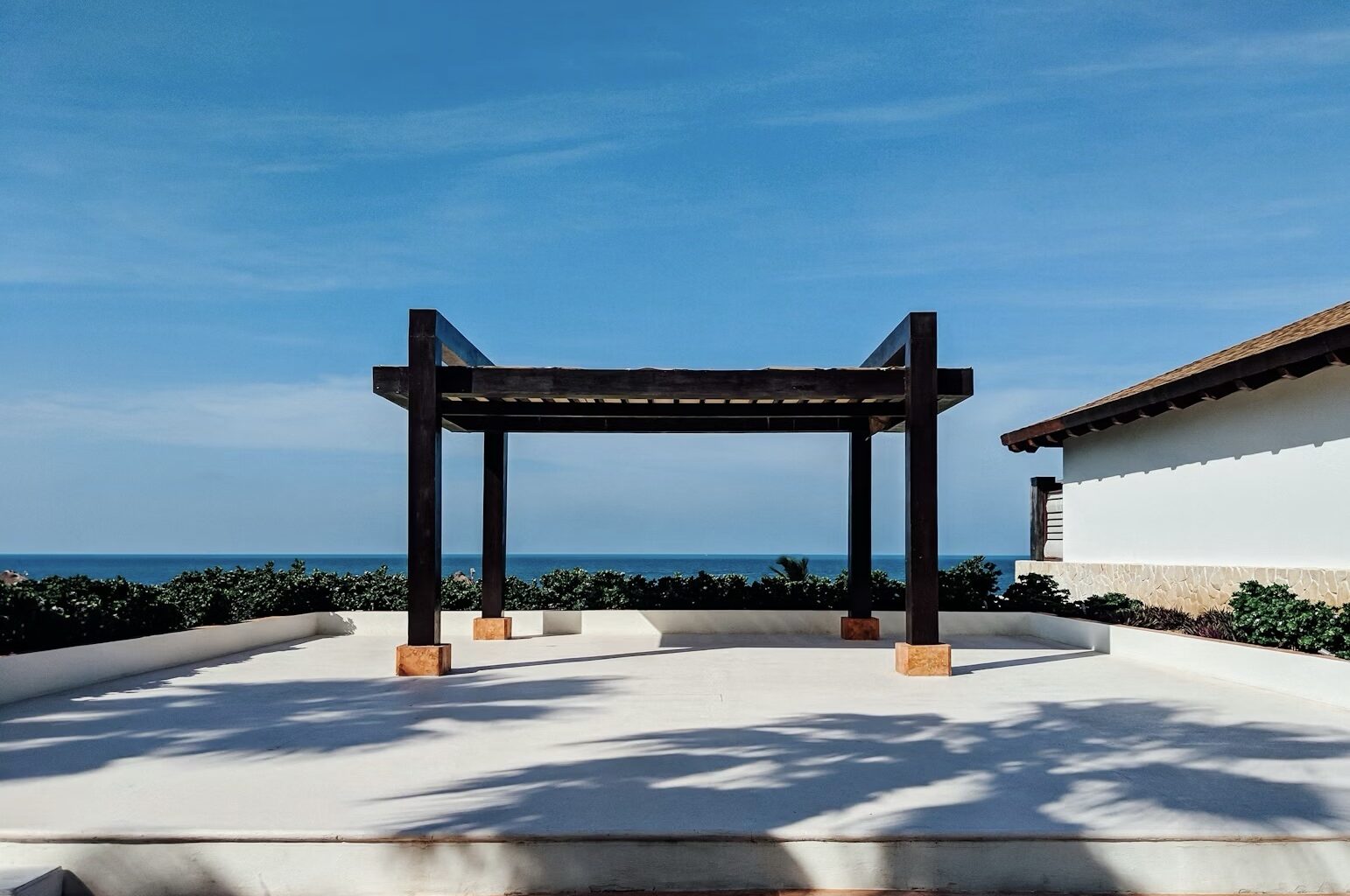
Photo: Maxwell Young / Unsplash
The Riviera Maya real estate market is booming. Property values across the corridor from Puerto Morelos to Tulum rose approximately 14 percent in 2025, making the state of Quintana Roo one of Mexico’s fastest-appreciating markets. And a whopping 65 percent of transactions in the region involve international buyers, most of them Americans and Canadians drawn by the combination of Caribbean Sea coastline, strong rental yields averaging seven to nine percent, and prices that remain 30 percent to 50 percent below comparable properties in the United States or Europe.
Whether the goal is a two-bedroom condo in Playa del Carmen or a beachfront villa in the Mayakoba corridor, the appetite for foreign-owned coastal property here shows no sign of slowing down.
But there’s one word every prospective foreign buyer needs to understand before signing anything: fideicomiso. Pronounced fee-day-coh-MEE-so, it’s the bank trust that allows non-Mexican citizens to legally own residential property in what the Mexican Constitution defines as the “restricted zone,” land within roughly 31 miles (50 kilometers) of any coastline. That includes every ocean-view condo, jungle retreat, and beachfront lot along the Riviera Maya. A system that has been around since 1973 and has facilitated tens of thousands of successful transactions, it’s not complicated, but it does require attention to detail… and qualified legal advice.
How the Fideicomiso in Riviera Maya Works
A fideicomiso is a three-party arrangement. A Mexican bank acts as trustee and holds the legal title to the property. The foreign buyer is named as the beneficiary and retains full control, including the right to live in the property, rent it, renovate it, sell it, or pass it on to heirs. The third party is the Secretaría de Relaciones Exteriores (the SRE, or Ministry of Foreign Affairs), which issues the permit authorizing the creation of the trust. It is important to understand what this is not: it is not a lease, and it is not a time-limited license.
The bank cannot sell, encumber, or make decisions about your property without your explicit written instruction. Its role is purely custodial. The trust runs for 50 years and can be renewed indefinitely. If the bank encounters financial trouble, the property held in the trust is not considered a bank asset and is simply transferred to another institution.

The process follows a standard sequence. You identify a property and sign a purchase agreement, then select a Mexican bank to serve as trustee. Common choices include BBVA Bancomer, Banorte, Scotiabank Mexico, and Banco Santander. The bank prepares the application and submits it to the SRE, a review that generally takes three to six weeks. Once the permit is issued, closing takes place before a notario público, a government-appointed legal authority who verifies title, confirms taxes are paid, and ensures the deal is in order.
The foreign buyer signs the trust deed and the so-called Calvo Clause, a constitutional formality in which the buyer agrees not to seek diplomatic intervention regarding the property. The deed is then registered with the Public Registry of Property. From that point, the buyer is the legal beneficial owner. The entire process from signed agreement to registered trust typically takes 45 to 90 days.
Buying Luxury Real Estate in Riviera Maya
Foreign buyers should budget for total closing costs of between 5 percent and 8 percent of the purchase price. The fideicomiso setup fee runs US$2,000 to US$3,000, covering the bank’s administrative work, legal filings, and the first year’s maintenance. Annual maintenance fees from that point forward generally fall between US$500 and US$1,000.
The SRE permit fee increased to MX$21,650 as of January 2026. Beyond the trust-specific costs, Quintana Roo’s acquisition tax is fixed at 2 percent of the assessed property value, notary fees typically add 1 percent to 2 percent, and appraisals run US$1,000 to US$1,500 when required. It is also worth noting that over 90 percent of foreign property purchases in Mexico are cash transactions, largely because securing a Mexican mortgage as a non-citizen involves higher interest rates and down payments of 30 percent to 50 percent.
As for what you can expect to pay for the property itself, that depends heavily on location within the corridor. Playa del Carmen condos currently average around MX$70,800 per square meter, while Tulum comes in somewhat lower at MX$57,200. In practical terms, a one-bedroom condo in Playa del Carmen starts at roughly US$167,000 to US$200,000, while luxury developments in gated communities like Playacar or Tulum’s Aldea Zama push well beyond US$400,000.
Beachfront properties command a premium of 100 percent to 200 percent over comparable inland units, and branded residences from names like Ritz-Carlton and EDITION start north of US$1 million. Buyers should also factor in monthly HOA fees, which range from roughly US$100 to US$200 for standard condos and US$300 to US$500 for luxury developments with amenities like rooftop pools, gyms, and 24/7 security.
___________________
Bryan Dearsley is a luxury lifestyles writer, a prolific traveler, and a Co-Founder of the Riley network of luxury lifestyle websites.


