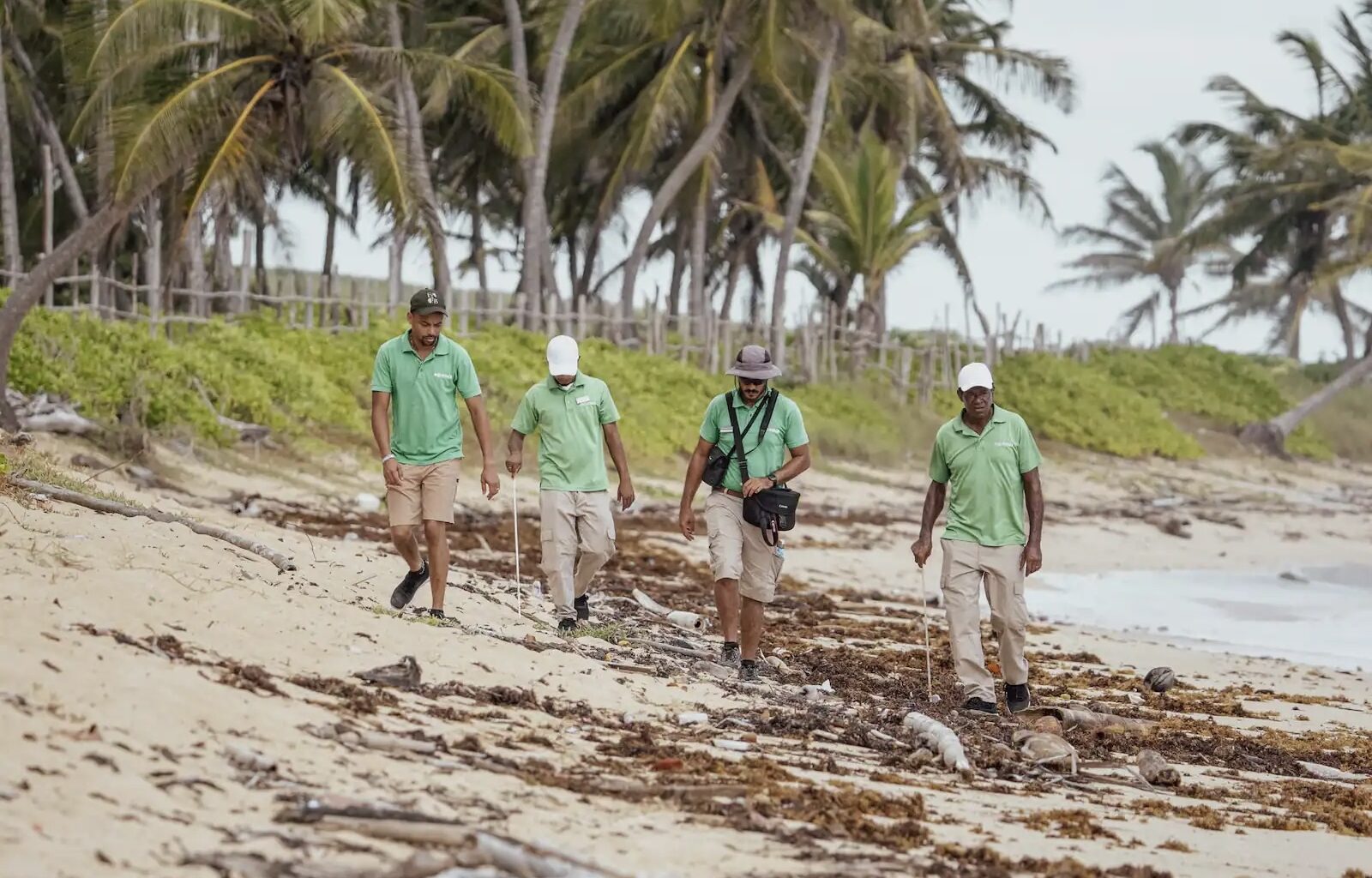
Photo: Eco-Bahía México Foundation
Every year on March 3, World Wildlife Day draws international attention to species and ecosystems under threat. This year, the United Nations chose medicinal and aromatic plants as its focus, under the theme “Medicinal and Aromatic Plants: Conserving Health, Heritage and Livelihoods.”
In the Riviera Maya, the Eco-Bahía México Foundation took the occasion to run a hands-on education program at the Bahia Principe Riviera Maya resort complex, aimed at raising awareness of native flora as the foundation of the region’s biodiversity. For international expats and visitors staying or living along this stretch of Quintana Roo‘s coast, the initiative offers a window into the conservation work happening on the ground at one of the area’s largest resort properties.
The Eco-Bahía Foundation, which has operated in Mexico since 1999, is the environmental arm of Grupo Piñero, the Spanish hospitality company behind Bahia Principe Hotels & Resorts. Its conservation model combines scientific research, community outreach, and environmental education, and it has expanded beyond Mexico into the Dominican Republic. The foundation’s World Wildlife Day activation, called “The Power of Plants,” centered on the cultural and ecological value of the native flora of Quintana Roo — plants that sustain wildlife, underpin traditional medicine, and form the base of local ecosystems that tourists and residents alike depend on.
What’s Involved for World Wildlife Day
The foundation set up an interactive stand inside the Bahia Principe Riviera Maya complex, targeting resort staff as its primary audience. The format combined informational displays on local plant species with traditional knowledge drawn from the region’s Maya heritage. Participants could handle and smell aromatic and medicinal plants native to Quintana Roo, learning about their traditional applications and their role in supporting local wildlife — from pollinators to the wider food chain.
One of the main activities was the creation of a “green first-aid kit”: a curated collection of medicinal and aromatic plants with explanations of their traditional uses. Plants like ruda (rue), epazote, and sábila (aloe vera) are among the species historically used in Maya medicine and still cultivated across the region. The session also included an environmental commitments station, where participants wrote down personal actions they could take to support biodiversity in their daily routines — a low-threshold entry point that the foundation uses to extend the reach of its conservation message beyond formal programs.
Luis Verdín, Director of the Eco-Bahía México Foundation, framed the event around a straightforward conservation argument: protecting visible wildlife starts with protecting the plants that support it. “When we help someone understand that caring for a plant is also caring for biodiversity, we are planting long-term conservation,” he said.
Why This Matters for Visitors
The Riviera Maya draws millions of international tourists each year, many of whom return repeatedly or choose to put down roots as long-term residents. The region’s appeal is inseparable from its natural environment: the Mesoamerican Reef, the cenote systems that run beneath the Yucatán Peninsula, and the jungle that presses up against the coast all depend on healthy plant ecosystems. Native flora stabilizes soil, filters water entering the underground aquifer network, and provides habitat for the birds, reptiles, and mammals that make the region ecologically distinct.
The foundation’s broader track record gives some context for what sustained conservation investment looks like in practice. Since 1999, it has released more than 110,000 sea turtle hatchlings and handled more than 1,000 wildlife recovery cases. Its environmental education program runs partnerships with local schools, scientific institutions, and community organizations. Expanding that work to include native plant awareness reflects a growing understanding that animal conservation cannot be separated from the plant systems those animals rely on.
For the international community living or traveling in the Riviera Maya, engagement with initiatives like this one is increasingly part of what responsible tourism and residency looks like. The foundation invites public participation in its conservation work, including donations, through its official website. The “Power of Plants” activation is part of a wider environmental education program and aligns with the UN’s 2026 emphasis on the underrecognized role of medicinal and aromatic plants in global health, culture, and ecological balance.
___________________
Bryan Dearsley is a luxury lifestyles writer, a prolific traveler, and the founder of the Riley network of luxury lifestyle websites.


